


About Us
Company Profile
Shenzhen Longshengming Pharmaceutical Technology Co., Ltd. is situated in Shenzhen, a special economic zone of China. As a comprehensive pharmaceutical service enterprise, we take "Serving the health industry and empowering development with technology" as our mission, and are committed to helping Chinese pharmaceutical enterprises expand their products to the international market.
We specialize in the import and export of active pharmaceutical ingredients (APIs) and pharmaceutical intermediates. Adhering to the business philosophy of "Honesty and Trustworthiness, Preciseness and Innovation, Openness and Cooperation", we keep improving and innovating to optimize customer experience, expand and enrich the product pipeline, and strive to provide high-quality and high-standard pharmaceutical products and services for global customers.
Customer satisfaction is our unremitting pursuit, and integrity and reliability are our core commitment. We sincerely invite partners at home and abroad to join hands with us and jointly open a new chapter of mutual benefit and win-win cooperation.
-
30+Supply Area
-
100+Cooperative Partner
-
200+Products

Products


Quality
-
PLAN
-
ACT
-
CHECK
News
-
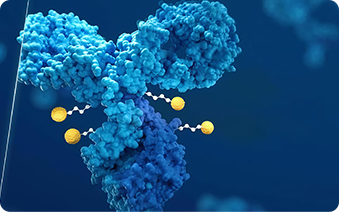
ABC Published in Nature BiotechnologyOver the past decade, antibody–drug conjugates (ADCs) have emerged as a powerful targeted cancer therapy, delivering cytotoxic payloads to tumor cells with high specificity. ADCs have demonstrated strong clinical efficacy and safety across multiple tumor types.
-
Merck's Imidazolid injection approved in ChinaMerck today announced that its novel carbapenem/enzyme inhibitor combination formulation—imipenem for injection—has been approved by the National Medical Products Administration (NMPA). This product is indicated for the treatment of infections caused by susceptible Gram-negative bacteria in patients aged 18 years and older.

-
Harvard Study Shows Eating More Plant Protein and Less Meat Can Lower Heart Disease RiskResearchers at the Harvard T.H. Chan School of Public Health have found that replacing animal protein with plant protein is closely associated with a lower risk of cardiovascular disease (CVD) and coronary heart disease (CHD).